Polyurethane Conveyor Rollers
Durable, Quiet, and Precision Engineered for Industry Performance
Polyurethane conveyor rollers represent a proven solution that addresses the most common failure points in traditional roller systems

In manufacturing and material handling systems, conveyor rollers serve as the backbone of operational efficiency. These components keep production lines moving, materials flowing, and operations running smoothly across facilities worldwide. When a single roller fails, it can trigger costly downtime, disrupt production schedules, and compromise product quality.
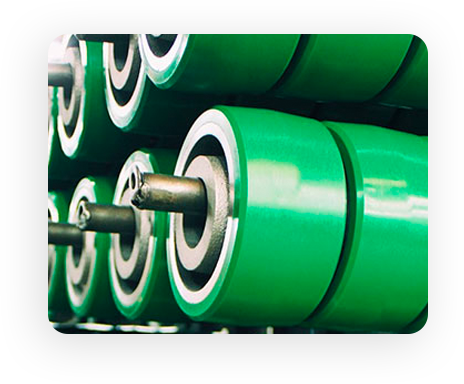
Polyurethane conveyor rollers combine precision-machined metal cores with engineered polyurethane coverings to deliver superior performance in demanding industrial environments. Unlike conventional metal, rubber, or plastic rollers, these components offer exceptional abrasion resistance, noise reduction, and operational longevity. At Gallagher, we’ve engineered polyurethane rollers and wheels for clients across automotive manufacturing, food processing, logistics, and packaging industries, developing solutions that withstand millions of cycles while maintaining dimensional stability and performance consistency.

What Are Polyurethane Conveyor Rollers?
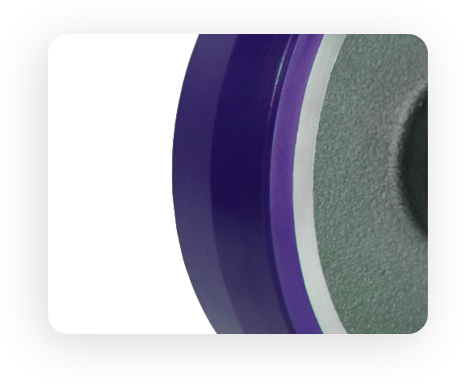
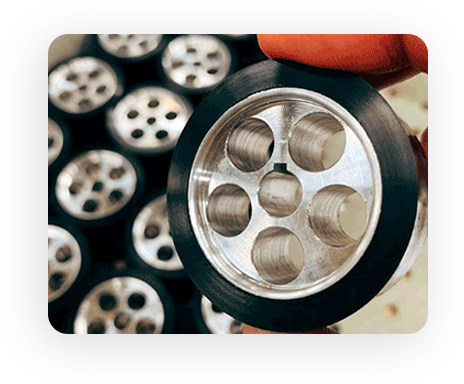
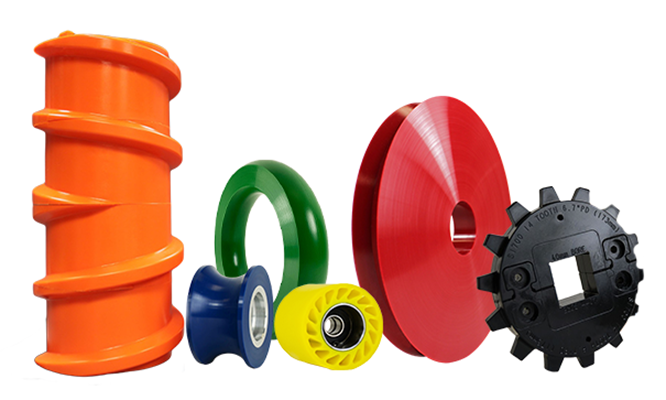
Polyurethane conveyor rollers feature a precision-machined core constructed from steel, aluminum, or stainless steel, surrounded by a chemically bonded polyurethane covering. This dual-material design leverages the structural strength of metal with the protective and functional benefits of polyurethane elastomer.
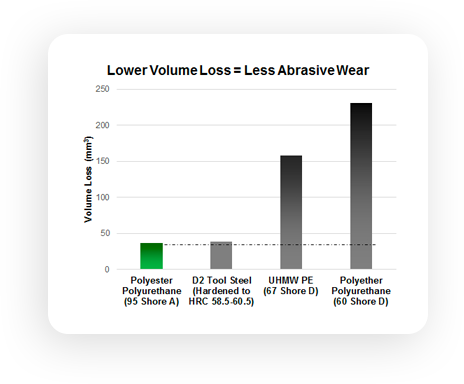
The polyurethane covering serves multiple functions in conveyor systems. It provides a resilient, impact-absorbing surface that protects the roller and the materials being conveyed. The material’s inherent properties deliver exceptional abrasion resistance, often outlasting rubber by 4-to-1 in high-wear applications. Polyurethane also dampens vibration and noise, creating quieter work environments while reducing mechanical stress on conveyor frames and drive systems.
Five Functional Benefits of Polyurethane Conveyor Rollers
Polyurethane conveyor rollers deliver critical performance advantages that directly impact operational efficiency:
- Quiet operation: Polyurethane absorbs vibration and reduces noise compared to metal or nylon rollers, improving workplace conditions and helping facilities meet OSHA requirements
- Non-marking performance: Gentle surface contact prevents product damage and eliminates floor scuffing common with harder roller materials
- Corrosion resistance: Unlike steel rollers that rust or rubber that degrades, polyurethane maintains integrity when exposed to moisture, oils and many industrial chemicals
- Continuous duty capability: Engineered for 24/7 operation in demanding environments without performance degradation or frequent maintenance intervals
- Floor-safe design: Softer contact surfaces protect conveyed products and facility flooring from wear and damage
Core Components of a Polyurethane Conveyor Roller
Precision Core Design
The core provides structural integrity and mounting interfaces for conveyor systems. Steel cores offer maximum strength for heavy-load applications, supporting weights from several hundred to several thousand pounds per roller. Stainless steel cores deliver corrosion resistance for food processing, pharmaceutical manufacturing, and washdown environments. Aluminum cores reduce weight in applications where minimizing system mass improves energy efficiency or allows for lighter structural framing.
Wall thickness, concentricity tolerances, and dynamic balancing critically affect roller performance. Cores must maintain tight tolerances to prevent wobble and vibration during operation. Gallagher engineers specify wall thicknesses based on load requirements and span distances, ensuring cores resist deflection under maximum design loads. Dynamic balancing minimizes runout, which is essential for high-speed conveyors where imbalance causes premature bearing failure and excessive vibration.
Polyurethane Covering
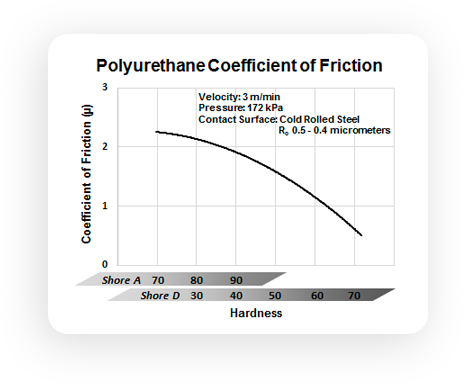
Polyurethane durometer hardness ranges from 60A to 75D, providing engineers with material options for different operational requirements. Lower durometers (60A-80A) offer greater cushioning and grip, making them suitable for applications requiring product protection or increased traction. Higher durometers (90A-75D) deliver enhanced wear resistance and load-bearing capacity for heavy-duty applications.
Surface finish options include smooth, crowned, grooved, knurled, or precision-ground configurations. Smooth surfaces work well for general conveying applications. Crowned surfaces help center products on the conveyor. Grooved patterns facilitate drainage in wet environments or improve grip on smooth-bottomed products. Knurled finishes maximize friction for incline conveyors, while ground surfaces provide tight dimensional tolerances for applications requiring precise roller geometry.
Shaft & Bearing Configurations
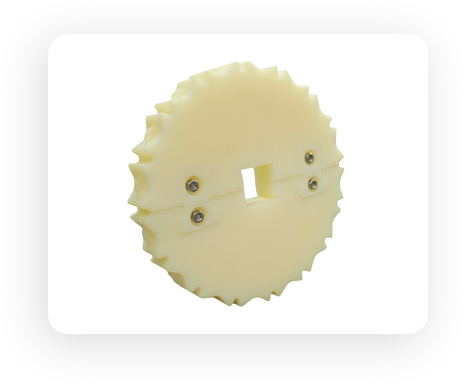
Shaft design must accommodate specific mounting requirements and torque transmission needs. Keyed shafts transfer rotational force in driven roller applications. Threaded shafts simplify installation and adjustment. Custom shaft geometries integrate with proprietary conveyor frames or legacy equipment.
Bearing selection impacts load distribution, rotational friction, and maintenance intervals. Sealed bearings protect against contamination in dusty or wet environments. High-capacity bearings support heavier loads and extend service life. Integration with sprockets, pulleys, and drive assemblies requires careful consideration of hub design, keyway placement, and shaft extension dimensions to ensure reliable power transmission.
Why Choose Polyurethane Conveyor Rollers Over Other Materials
Polyurethane vs. Rubber Rollers
Polyurethane demonstrates superior abrasion resistance compared to natural or synthetic rubber. In applications involving constant contact with abrasive materials or high-friction operation, polyurethane rollers can last longer than rubber alternatives. This extended lifespan reduces replacement frequency, minimizes maintenance labor, and lowers total cost of ownership.
Polyurethane maintains dimensional stability across wider temperature ranges and resists permanent deformation under constant load. Rubber rollers often develop flat spots from static loading or lose their shape over time, creating irregular motion and product handling issues.
Polyurethane vs. Metal Rollers
Non-corrosive properties give polyurethane rollers distinct advantages in moisture-prone or chemical-exposed environments. Unlike steel rollers that rust or aluminum that oxidizes, polyurethane resists degradation from water, oils and many solvents. This corrosion resistance proves particularly valuable in outdoor conveyors, food processing facilities, and chemical manufacturing plants.
Noise dampening represents another significant benefit. Metal-on-metal contact generates substantial noise in conveyor systems, while polyurethane absorbs impact and reduces sound transmission. Lighter weight compared to steel rollers can reduce energy consumption in accumulation conveyors and decrease structural loading on conveyor frames.
Polyurethane vs. Plastic Rollers
Load-bearing capacity distinguishes polyurethane from conventional plastic materials. While plastics like PVC or acetal offer corrosion resistance and low weight, they lack the compressive strength needed for heavy industrial loads. Polyurethane supports significantly higher loads while maintaining flexibility and impact resistance.
Dimensional stability under temperature variation surpasses most plastics. Plastic rollers can become brittle in cold environments or soften in elevated temperatures, affecting performance and potentially causing failure. Polyurethane maintains consistent properties across operational temperature ranges, and polyurethane’s technical properties make it suitable for applications from cold storage to heated process environments.
Four Advantages of Polyurethane Conveyor Rollers
1. Exceptional Wear and Abrasion Resistance
Polyurethane’s molecular structure provides outstanding resistance to wear from continuous friction. In high-speed systems moving abrasive materials, polyurethane outperforms rubber, plastic, and even some metal surfaces. This durability translates to extended roller life, reduced maintenance schedules, and fewer production interruptions.
2. Low Noise and Vibration
Sound dampening properties make polyurethane rollers ideal for noise-sensitive environments. Production facilities, warehouses near residential areas, and 24-hour operations benefit from reduced acoustic emissions. Lower vibration also decreases mechanical stress on bearings, shafts, and conveyor frames, extending overall system life.
3. Chemical, Moisture and Temperature Resistance
Polyurethane rollers withstand harsh industrial environments that would degrade alternative materials:
- Chemical resistance: Maintains performance when exposed to hydraulic oils, cutting fluids, solvents and industrial cleaning agents without swelling or degradation
- Moisture immunity: Performs reliably in wet environments, and frequent washdown conditions without absorbing water or losing mechanical properties
- Temperature range: Operates effectively from cold storage environments to heated process lines up to 180°F
- Oxidation resistance: Unlike rubber compounds that crack and harden with age, polyurethane resists oxidative breakdown for extended service life
- Sanitary compliance: FDA-grade formulations available for food processing and pharmaceutical applications requiring strict hygiene standards.
4. Customization for Any Conveyor
Every industrial application presents unique requirements for roller dimensions, hardness, surface finish, and shaft configuration. Gallagher’s engineering team works with clients to specify optimal roller designs for specific operational conditions. This customization capability supports OEM installations and retrofit projects with rapid turnaround times, minimizing equipment downtime during upgrades or repairs.
Industrial Applications of Polyurethane Conveyor Rollers
Manufacturing and Assembly LInes
Automotive assembly plants rely on polyurethane rollers to transport vehicle components without surface damage. Electronics manufacturers use these rollers to move sensitive circuit boards and finished products. Printing operations benefit from non-marking surfaces that protect printed materials, while packaging lines utilize polyurethane’s gentle handling characteristics to prevent product damage during case formation and palletizing.
Distribution, Warehousing, and Logistics
High-throughput distribution centers require reliable conveyor systems capable of handling millions of packages annually. Polyurethane rollers support the continuous operation essential for e-commerce fulfillment, providing quiet performance in facilities operating around the clock. Accumulation zones, sortation systems, and transfer conveyors all benefit from polyurethane’s durability and low-maintenance characteristics.
Food Processing and Sanitary Environments
High-throughput distribution centers require reliable conveyor systems capable of handling millions of packages annually. Polyurethane rollers support the continuous operation essential for e-commerce fulfillment, providing quiet performance in facilities operating around the clock. Accumulation zones, sortation systems, and transfer conveyors all benefit from polyurethane’s durability and low-maintenance characteristics.
Food and pharmaceutical applications demand specialized roller performance:
- FDA compliance: Food-grade polyurethane formulations meet regulatory requirements for direct and indirect food contact applications, dry and wet.
- Bacterial resistance: Non-porous surfaces prevent bacterial harboring and facilitate effective cleaning and sanitization
- Washdown capability: Withstands repeated exposure to hot water and caustic cleaning chemicals without degradation
- Hydrolysis resistance: Specialized compounds prevent breakdown in applications involving prolonged moisture exposure
- Corrosion-free operation: Eliminates rust contamination concerns present with steel rollers in wet environments.
Engineering and Performance Considerations
Load, Speed, and Tolerance Factors
Dynamic balancing ensures smooth rotation at operating speeds, preventing vibration that causes premature failure. Concentricity, which is the precise alignment of the roller’s outer surface with its rotational axis, affects tracking accuracy and bearing life. Total indicated runout (TIR) measurements verify rollers meet specifications for high-precision applications.
Matching polyurethane hardness and covering thickness to expected loads and rotational speeds optimizes performance. Insufficient durometer ratings can cause excessive compression and heat buildup, while overly hard compounds may not provide adequate grip or cushioning.
Bonding and Manufacturing Quality
Polyurethane bonding to metal cores requires proper surface preparation and chemical adhesion systems. Gallagher utilizes primer systems and controlled curing processes to create molecular bonds that prevent delamination. This attention to bonding quality ensures the polyurethane covering remains securely attached throughout the roller’s service life, even under high loads and continuous operation.
Maintenance and Lifecycle Efficiency
Reduced maintenance requirements deliver measurable cost savings:
- Lower labor costs: Fewer replacement cycles reduce maintenance labor hours and minimize production interruptions
- Reduced inventory: Longer-lasting rollers decrease spare parts inventory requirements and associated carrying costs
- Minimal downtime: Higher reliability reduces unplanned maintenance events that disrupt production schedules
- Total cost advantage: While initial costs may exceed rubber or plastic alternatives, extended lifespan and reduced maintenance deliver superior ROI.
Work with Gallagher for Custom Polyurethane Conveyor Rollers
Gallagher’s engineering-driven approach to roller design begins with understanding your specific application requirements, operating conditions, and performance objectives. Our team analyzes load profiles, speed requirements, environmental factors, and integration needs to develop optimal roller specifications.
Full-service capabilities encompass every phase from initial concept through production. We formulate custom polyurethane compounds, design and fabricate tooling, conduct performance testing, and manufacture rollers to exact specifications. This integrated approach ensures consistent quality while providing flexibility to address unique application challenges.
Whether you’re designing new conveyor systems, upgrading existing equipment or seeking replacement rollers with improved performance, Gallagher delivers precision-engineered solutions backed by six decades of polyurethane expertise.
Contact our technical team to discuss your conveyor roller requirements and request a quote for custom-engineered components tailored to your application.