
Uncategorized

machining polyurethane

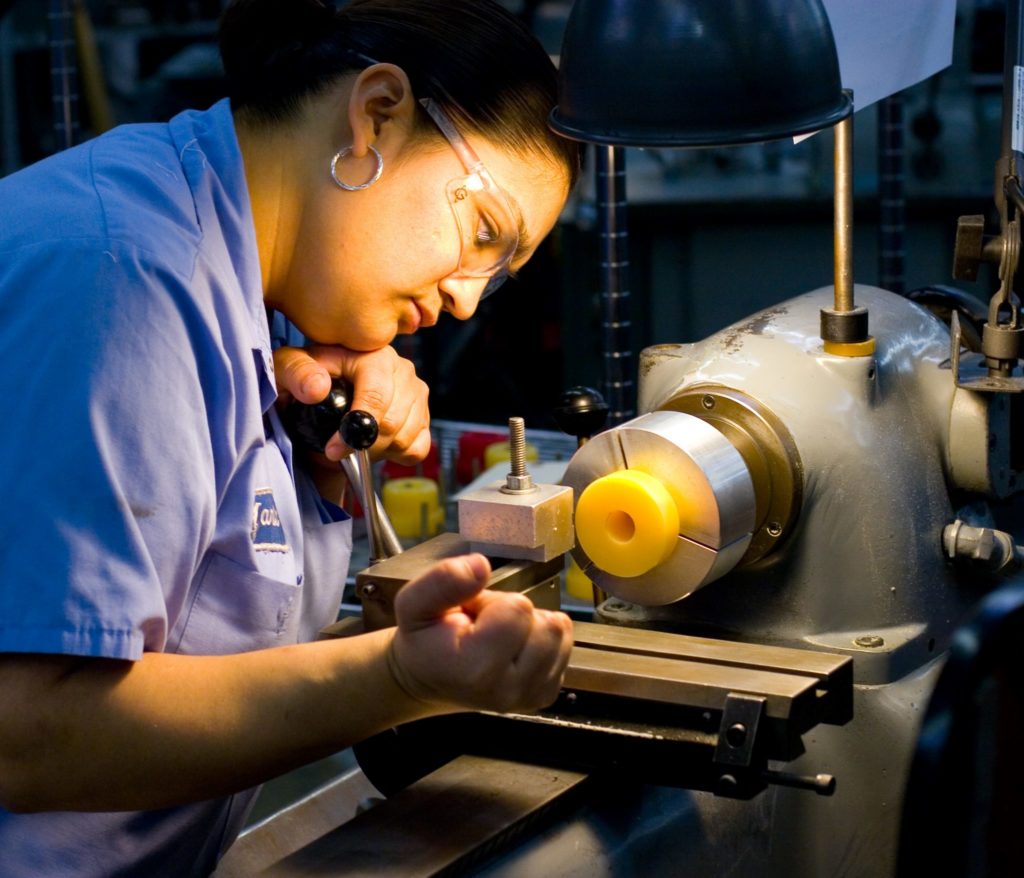
Machining Cast Polyurethanes

[et_pb_section fb_built=”1″ _builder_version=”3.22″][et_pb_row _builder_version=”3.25″ background_size=”initial” background_position=”top_left” background_repeat=”repeat”][et_pb_column type=”4_4″ _builder_version=”3.25″ custom_padding=”|||” custom_padding__hover=”|||”][et_pb_text _builder_version=”4.7.0″ use_border_color=”off”] Machining Cast Polyurethanes Cast polyurethanes can be readily turned, waterjet cut, sawed, drilled, ground or milled. We offer many engineering shapes of our compounds which can often be used to make prototypes or limited production quantities. It is important to note that […]

Machining Cast Polyurethanes Read More »
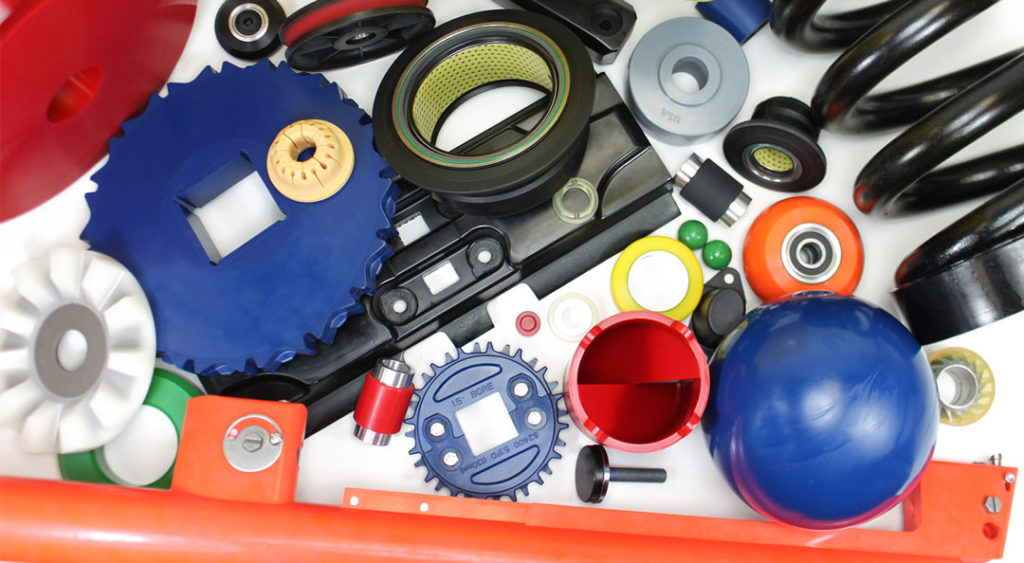
Gallagher polyurethane parts

Urethane Compound Specifications

[et_pb_section fb_built=”1″ _builder_version=”3.22″][et_pb_row _builder_version=”3.25″ background_size=”initial” background_position=”top_left” background_repeat=”repeat”][et_pb_column type=”4_4″ _builder_version=”3.25″ custom_padding=”|||” custom_padding__hover=”|||”][et_pb_text _builder_version=”4.7.0″ background_size=”initial” background_position=”top_left” background_repeat=”repeat” use_border_color=”off” border_color=”#ffffff” border_style=”solid”] Urethane Compound Specifications ​A successfully performing elastomer should be well documented by a meaningful specification. Why? Because hardness alone is not a reliable specification. At the same hardness we produce many compounds with widely different performance characteristics. Good

Urethane Compound Specifications Read More »

polyurethane sprocket design

Designing Polyurethane Products

[et_pb_section fb_built=”1″ _builder_version=”3.22″][et_pb_row column_structure=”2_3,1_3″ _builder_version=”3.25″ background_size=”initial” background_position=”top_left” background_repeat=”repeat”][et_pb_column type=”2_3″ _builder_version=”3.25″ custom_padding=”|||” custom_padding__hover=”|||”][et_pb_text _builder_version=”4.7.0″ use_border_color=”off”] Designing Polyurethane Products The following steps in order yield the best approach to design and problem-solving. We encourage you to contact us for help every step of the way. Prioritize the properties that are necessary for performance in a given application.

Designing Polyurethane Products Read More »

Polyurethane Typical Elastomer Characteristics

Physical Constants of Urethane Elastomers

[et_pb_section fb_built=”1″ _builder_version=”3.22″][et_pb_row _builder_version=”3.25″ background_size=”initial” background_position=”top_left” background_repeat=”repeat”][et_pb_column type=”4_4″ _builder_version=”3.25″ custom_padding=”|||” custom_padding__hover=”|||”][et_pb_text _builder_version=”4.7.0″ background_size=”initial” background_position=”top_left” background_repeat=”repeat” use_border_color=”off” border_color=”#ffffff” border_style=”solid”] Physical Constants of Urethane Elastomers   [/et_pb_text][et_pb_text admin_label=”table” module_class=”table6even” _builder_version=”3.27.4″ background_size=”initial” background_position=”top_left” background_repeat=”repeat” use_border_color=”off” border_color=”#ffffff” border_style=”solid”] Compound Specific Gravity Thermal Conductivity -32°F to +32°F (-35°C to 0°C) 32°F to 75°F (0°C to 24°C) 75°F to 212°F (24°C

Physical Constants of Urethane Elastomers Read More »

Polyurethane Stoichiometry

[et_pb_section fb_built=”1″ _builder_version=”3.22″][et_pb_row _builder_version=”3.25″ background_size=”initial” background_position=”top_left” background_repeat=”repeat”][et_pb_column type=”4_4″ _builder_version=”3.25″ custom_padding=”|||” custom_padding__hover=”|||”][et_pb_text _builder_version=”4.7.0″ use_border_color=”off”] Polyurethane Stoichiometry Urethane Stoichiometry is the chemical relationship of the amount of reactive elastomer polymer to the amount of curing agent used. Selection of proper stoichiometry is our responsibility, it plays an all-important part in compression set resistance, cut and tear resistance

Polyurethane Stoichiometry Read More »

current impact shock load formula

Impact Shock Force Reduction with Polyurethane

[et_pb_section fb_built=”1″ _builder_version=”3.22″][et_pb_row _builder_version=”3.25″ background_size=”initial” background_position=”top_left” background_repeat=”repeat”][et_pb_column type=”4_4″ _builder_version=”3.25″ custom_padding=”|||” custom_padding__hover=”|||”][et_pb_text _builder_version=”3.27.4″ background_size=”initial” background_position=”top_left” background_repeat=”repeat” use_border_color=”off”]A urethane bumper can be designed by equating the kinetic energy of a moving body to the total work the bumper does as it brings the moving body to a stop. The work done is represented by the area under

Impact Shock Force Reduction with Polyurethane Read More »

Scroll to Top