Author name: Rich Gallagher

Polyurethane vs. Nylon Wheels: Which Material Performs Best?​

Selecting the right wheel material directly impacts equipment performance, floor protection, operator safety and total cost of ownership in industrial operations. For production managers, logistics coordinators and original equipment manufacturer (OEM) designers, the choice between polyurethane and nylon wheels determines whether material handling systems operate efficiently or create costly maintenance issues. Polyurethane and nylon represent […]

Polyurethane vs. Nylon Wheels: Which Material Performs Best?​ Read More »

What is in Polyurethane? Chemistry, Components, & Formulations

Polyurethane’s molecular composition, core components, and manufacturing variables help engineers and procurement specialists make informed decisions. Polyurethane is a polymer formed by reacting polyols with isocyanates to create urethane linkages. By tuning polyol type (polyether vs polyester), isocyanate family (aromatic vs aliphatic), and additives, manufacturers control hardness, abrasion resistance, hydrolysis resistance, and UV stability. The

What is in Polyurethane? Chemistry, Components, & Formulations Read More »

Polyurethane vs. Rubber Wheels: Which Material Performs Better?​​

Understanding the difference between polyurethane and rubber wheels and what applications they’re best suited for is critical. Selecting the right wheel material for industrial equipment, material handling systems, or original equipment manufacturer (OEM) applications directly impacts performance, safety, and operational costs. Polyurethane and rubber are reliable, but they offer different performance characteristics that can optimize

Polyurethane vs. Rubber Wheels: Which Material Performs Better?​​ Read More »

Polyurethane bushing

The Ultimate Engineering Material

[et_pb_section fb_built=”1″ _builder_version=”3.22″][et_pb_row _builder_version=”3.25″ background_size=”initial” background_position=”top_left” background_repeat=”repeat” custom_padding=”30px|||||”][et_pb_column type=”4_4″ _builder_version=”3.25″ custom_padding=”|||” custom_padding__hover=”|||”][et_pb_text _builder_version=”4.4.2″ custom_margin=”||15px|||”] The Ultimate Engineering Material [/et_pb_text][et_pb_text admin_label=”What is an engineering material” _builder_version=”4.4.2″ text_line_height=”1.3em” module_alignment=”left” global_module=”4723″ saved_tabs=”all”] What is an engineering material? Engineering textbooks contain hundreds of pages and charts. Many listing the properties of engineering materials. They are typically classified as metals

The Ultimate Engineering Material Read More »

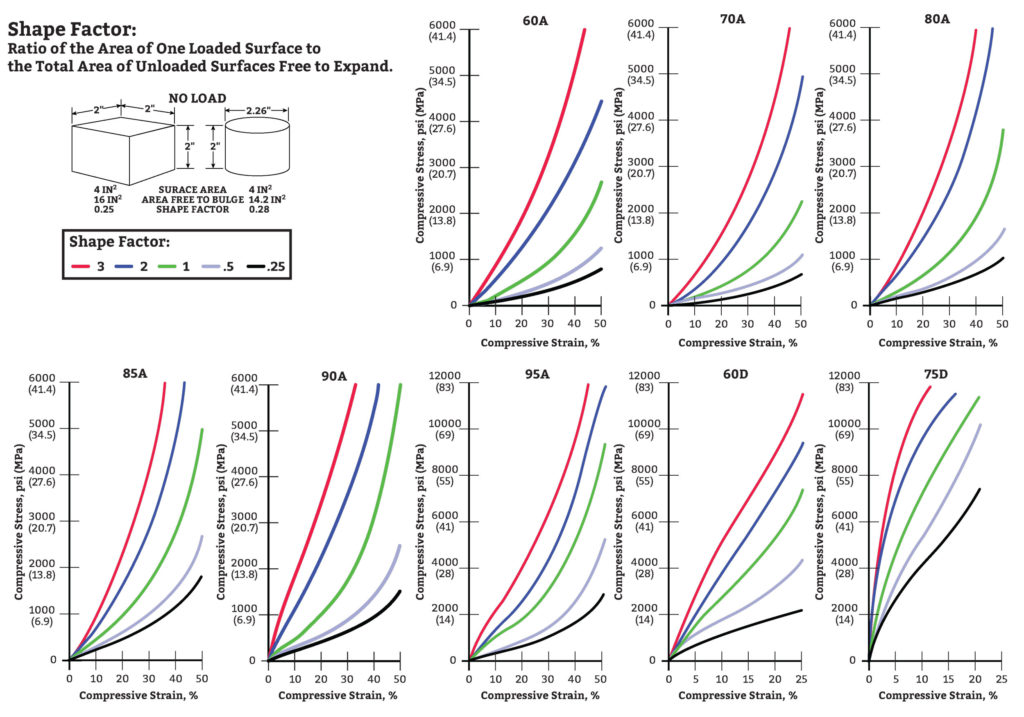
polyurethane shape factor

Key Questions When Selecting The Grade of Polyurethane:

[et_pb_section fb_built=”1″ admin_label=”section” _builder_version=”3.22″][et_pb_row admin_label=”row” _builder_version=”3.25″ background_size=”initial” background_position=”top_left” background_repeat=”repeat”][et_pb_column type=”4_4″ _builder_version=”3.25″ custom_padding=”|||” custom_padding__hover=”|||”][et_pb_text admin_label=”Text” _builder_version=”4.7.0″ background_size=”initial” background_position=”top_left” background_repeat=”repeat” hover_enabled=”0″ sticky_enabled=”0″] Key Questions When Selecting The Grade of Polyurethane: What is the main purpose of your polyurethane application? Are the conditions static or dynamic? More Impact Resistance? In what environment will the part work? Heat? Cold?

Key Questions When Selecting The Grade of Polyurethane: Read More »

Scroll to Top